
A preoccupation with Fakes?

Share this article

Pg.31,Vol.XXX, No.2, 1996,  “Prehistoric American”

I certainly hope not.But the fact remains that Fakes are an ever present problem. Late in 1988, I was politely informed by one of our illustrious members that there was just too much talk about fakes. I took heed and never wrote another article on the subject until 1994. Then my reinspi­ration came from many experienced and novice collectors who mentioned how much they enjoyed the more than fifty articles on the subject I had authored over the past 25 years. While contemplating this subject, I began to think about the commentary of others who stressed the very same subject. Allow me to share a few excerpts with you.

“Nothing makes the collector so unhappy as to discover he had driven a long way, bargaining carefully, and spent a tidy sum of money only to bring home a fake.” Earl Townsend, Jr.,”Birdstones”, 1959.

“It has been estimated by old-time collectors that about 1/2 of the bird-stones in the hands of collectors today are of questionable origin. It has been estimated also that the per­centages of questionable objects among other types may be: Bannerstones, 30 to 40%; diminutive axes, 90%; hematite plummets, 30%; and hardstone plummets, 80%.” Gregory Perim, “Central States Archaeological Journal”, January 1962.

“So many of today’s questionable  artifacts are so well made that perfect  judgement by the naked eye alone is  impossible”.  Gray LaDassor, “Central States Archaeological Journal”, No.1, 1965.

“When these objects are recog­nized by an expert as being fraudu­lent, the purchaser is sometimes resentful because he knows the piece in question was collected over fifty years go. Because an object is known to have been collected many years ago is no guarantee it is genuine”. Dr.Stanley J. Copeland, “Ohio Archaeologist”, No.1,1969.

“It is not possible for any one  person to be skilled or gifted to the  extent where he or she can be 100%  perfect in recognizing Indian relic  slate or stone frauds”.  Cameron Parks, “Ohio Archaeologist”, No.2, 1976.

“A reproduction is a fake when offered as a prehistoric implement at a collector’s price”. Scott Haskins, “Ohio Archaeologist”, No.2,1978.

“Years ago, I bought an artifact  to be real but later learned the arti­   fact was fake and the story behind it  was a lie”.  Marvin Seeley, “Artifacts” Issue No.4, 1984.

“The clever fraud makers invest  in genuine artifacts to copy and dupl cate . Some are known to visit muse­   ums, producing 3-dimensional draw­   ings and blueprints of choice speci­mens”.  John F .Berner,”Central States Archaeological Journal”, No.4,1984.

“Warning: More than any other  collectible field, fake relics, all  recently made and aged, are being  offered to the public everywhere as  genuine prehistoric artifacts”.  Robert Overstreet,”Indian Projectile Points price guide”, 1989.

The list of such experts could fill this journal to overflowing as perhaps no singular subject has become so prominent, time after time. Should I have elected not to quote the authors and date; this information could have been written yesterday. No, I don’t think there is too much conversation on the subject of fakes. Sometimes I ask myself why is the proliferation of fakes so intense? I think primarily because so few bring dishonest mak­ers or dealers to justice, probably for two reasons. Possible the fear of slan­der, and potentially being made a fool of publicly for having paid a “tidy” sum for a newly fashioned rock!

No article could be considered complete without a few expose’s. Currently an upper state Illinois faker who specialized in Ohio pipestone Hopewell pipe reproductions is now replicating famous Dr.Gordon Meuser slate artifacts. The only one’s being marketed are those that appeared in the small auction pictures.

The reason is that these are harder to identify. Each also is adorned with simulated Meuser type writing and date, taken directly from the late Doctor’s original catalog!

This past summer, I attended a knap-in. This is where those who experiment in reproduction of ancient flint types get together to trade raw material, tool technology and finished pieces. Here you could choose from Clovis to Lost Lake or Caddo knives for anywhere from $40 to $75 each, depending on the knapper skill.

Not every faker works with flint. A southern Indiana stone cutter is making good use of the off fall of his trade. Now making one good bannerstone per day, either in hardstone or slate. After finished grinding, each receives shot blasting to simulate pecking and polish, then microwaved to produce age appearing cracks and lines. Isn’t modern technology won­derful? The banners sell for $100 each, spot cash. (checks not accept­ed).

It used to be tradition that the good southeastern pottery came through a distributor who bought everything that surfaced. Greedy dealers didn’t like the mark-up so they make the pilgrimage to buy direct and save! The modern replicas are unlike anything genuine. The old adage is pay a lot, get the best. Not so, as the only thing for sure today, that you paid a high price. Think about it!

“Used by Permission of the Author” and originally published in American Indian Artifacts; Genuine or

Reproduction by Col. John F. Berner. Copyright © 2000 by American Antiquities, Inc.

The post A preoccupation with Fakes? appeared first on Arrowheads.com.

Recent Posts

By Kevin Jerome July 24, 2026
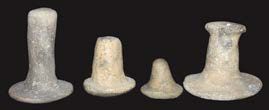
Explore the significance of Mississippian pottery trowels. Learn about their use in pottery-making & view our collection.
By tkxkuugb-ca June 29, 2026
Explore the Paleoindian Database for insights on Native American artifacts. Contact us for appraisals & collection support.
By tkxkuugb-ca May 16, 2026
Explore insights on Clovis tools & Scott Ashcraft's whistleblower case. Join the discussion on ethics in archaeology today!
By tkxkuugb-ca April 13, 2026
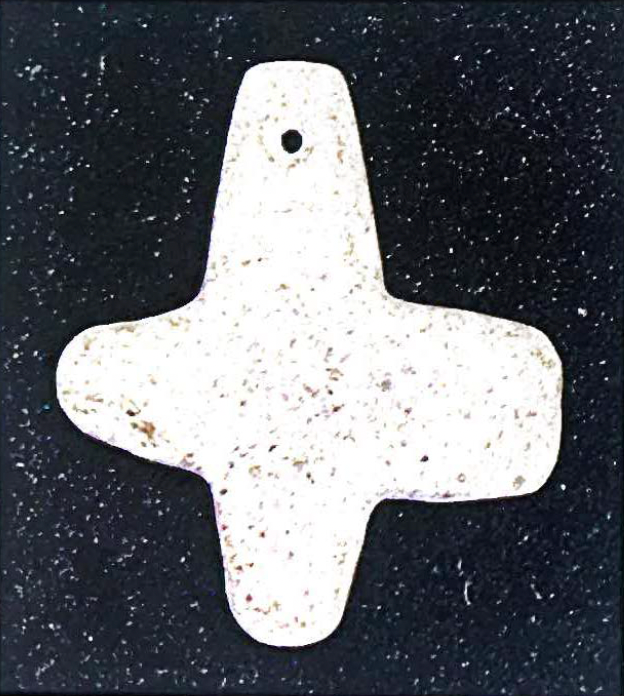
Learn about miniature Mississippian axe pendants' cultural significance. Contact us for appraisals & to buy authentic artifacts.
By Matt March 25, 2026
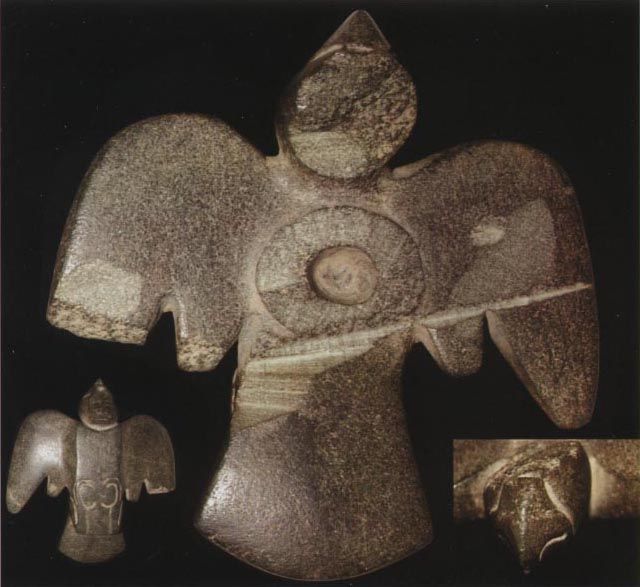
Explore the mystery of undrilled bird effigy pipes from TN. Learn about their significance & share your finds with us!
By tkxkuugb-ca March 20, 2026
Tune in to the Seven Ages Podcast to explore the Adena culture, Moundbuilders of the Ohio Valley. Join us for insights on Native American artifacts.
By Arrowheads March 20, 2026
Explore Gary Varient's passion for Native American artifacts. Join the community and share your collection today!
By Matt March 14, 2026
Learn to identify authentic arrowheads vs. reproductions. Consult experts for accurate appraisals and avoid costly mistakes.
By Matt March 3, 2026
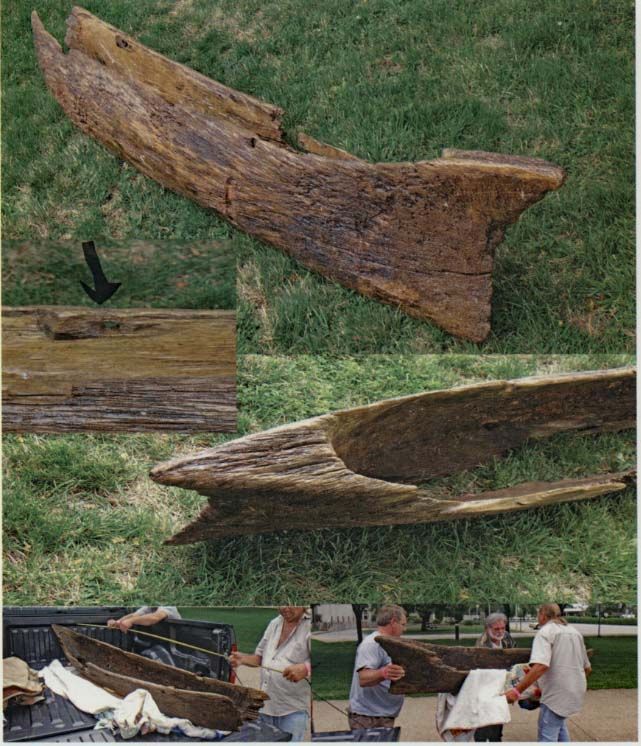
Learn about the rare dugout canoe found in the Ohio River. Contact us for artifact appraisal & preservation guidance.
By tkxkuugb-ca February 21, 2026
Learn more about the Paleo American Odyssey in these articles.
Show More