
The Unique Styles of Mississippi Benton Phase Tubular Bannerstones

Share this article

J. Neal Brown, Ph.D., Natchez, Mississippi

Originally Published in the Central States Archaeological Journal, Vol.55, No.1, pg.40

The tubular type bannerstone was a favorite of the Benton Culture. Many tubular type bannerstones have been found in the state of Mississippi, primarily within the geographical area known to have been occupied by Benton Peoples. The Benton phase in northeast Mississippi has been reliably dated to have occurred mostly between 3700 B.C. to 3200 B.C.

Lutz pictured a number of tubular bannerstones from North Mississippi, but did not differentiate them into the known distinctly different styles. Little information is currently known concerning the chronology of tubular bannerstone development within the Mississippi Benton phase.

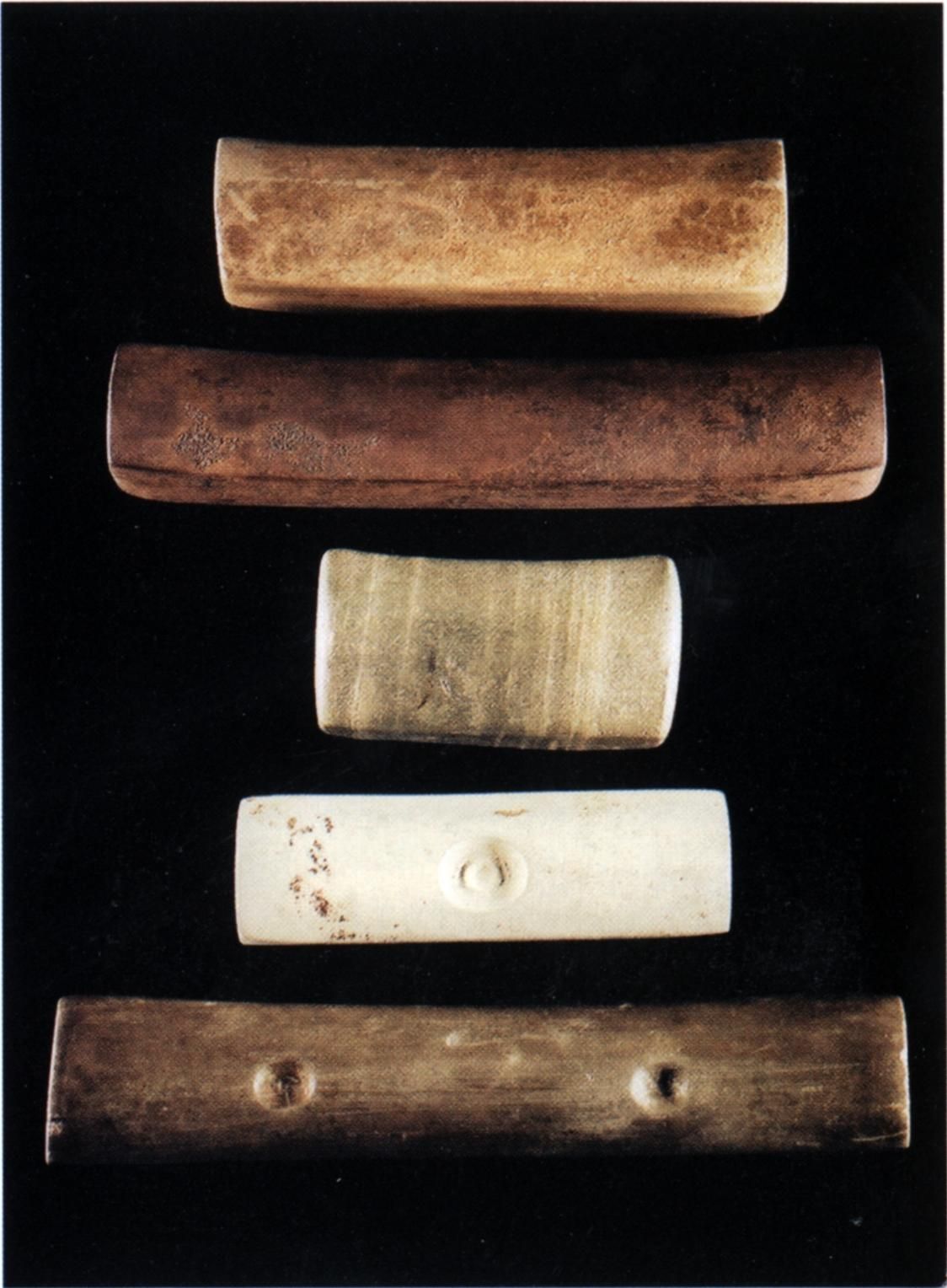
The two tubular bannerstones pictured in Figure above A and B are examples of the most often observed style of Benton tube. Collectors often refer to this tubular bannerstone as a “Covered Wagon” style due to its similar shape profile to the Conestoga Wagon of pioneer days. This style Benton tube was most often made from mint-green claystone, that most likely had its geological origin in the Quachita Mountains of central Arkansas, and it was a favorite material used by Benton culture peoples for manufacturing both tubular and shuttle style bannerstones. This claystone often contained bands

of a white material. The perforation, drilled through the long axis of tubular bannerstones, was most often parallel to these bands. Examples that exhibit bands that are perpendicular to the long axis of the bannerstone are rare. The “Covered Wagon” style bannerstone depicted in Figure IC is an example of this rare variant. The example depicted in Figure 1 B is made of a dark-brown claystone, found locally, that was often used to manufacture bannerstones. Higher developed examples of this style exhibit much more concavity of the top edge. However, both convex and straight top edge variants are known. The example depicted in Figure 1 D illustrates a slightly concave top edge with bilateral cane-drilled indentions. This variant with cane-drilled indentions is very rare. Also, solid-stick drilled indentions occur on some “Covered Wagon” style bannerstones. The example depicted in Figure 1 E was pictured earlier by both Knoblock and Lutz and it features bilateral solid-stick drilled indentions.


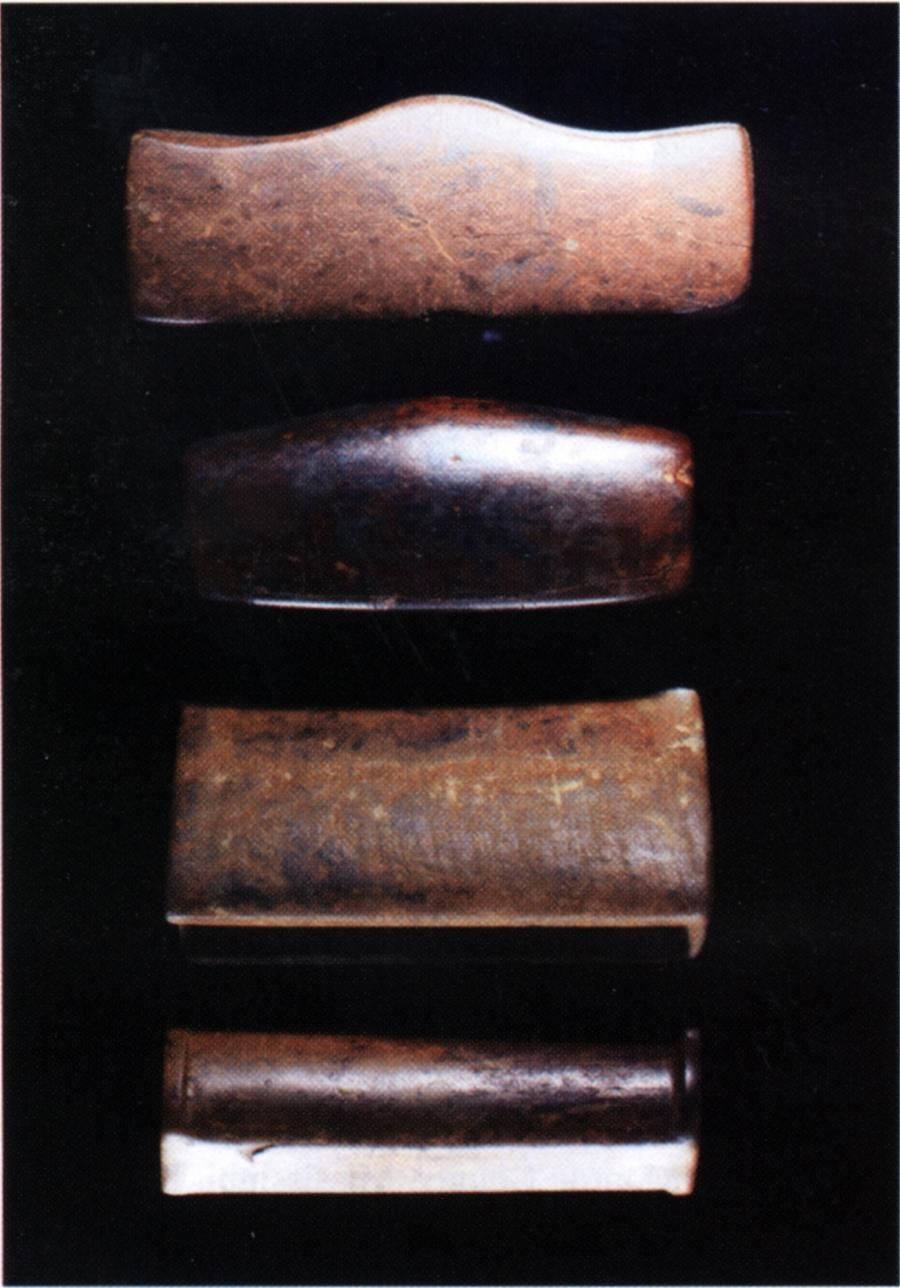
The example depicted in Figure 2 below is an example of a “Mississippi Crown” style Benton tube. This style is rectangular in shape with a well defined hump that is located in the middle of one side. The hump profile of highly developed examples resembles a three-prong crown. This style tube is only found in north Mississippi and most examples are made of mint-green claystone. Examples made of Limonite or a dark-brown claystone are known; cane drilled bilateral indentions occur on some examples of this style. The less developed examples are often made of Limonite and often exhibit cracking and sometimes exfoliation of the outer surface. Less developed examples are often found with caches of small preform biface blades made from Tuscaloosa gravel and small Benton biface points made from Tallahatta quartzite. The example illustrated in Figure 2 is a less developed style of a “Mississippi Crown” style banneerstone.

Another unique style Benton tubular bannerstone is depicted in Figure 2. This style Benton tube is called an “A-Frame” style by collectors. The geometric profile of highly developed examples are made of either a dark-brown claystone or Limonite. Most examples exhibit a fluted base with some having a purported shaft groove. Examples exhibiting a well defined paneling made by removal of the outer surface of each lateral side are known.

The rarest unique style of Benton tube is depicted in Figure 2. This unique Benton tubular bannerstone is called a “spool” style by collectors. Its geometric profile resembles a sewing machine thread spool. It is rounded in shape with the middle outer surface removed to create a paneling effect. Most examples have a fluted base and are made from mint-green claystone.”Used by Permission of the Author”
To learn more about or to join the Central States Archaeological Society, click here: CSASI.org

Recent Posts

By Kevin Jerome July 24, 2026
Explore the significance of Mississippian pottery trowels. Learn about their use in pottery-making & view our collection.
By tkxkuugb-ca June 29, 2026
Explore the Paleoindian Database for insights on Native American artifacts. Contact us for appraisals & collection support.
By tkxkuugb-ca May 16, 2026
Explore insights on Clovis tools & Scott Ashcraft's whistleblower case. Join the discussion on ethics in archaeology today!
By tkxkuugb-ca April 13, 2026
Learn about miniature Mississippian axe pendants' cultural significance. Contact us for appraisals & to buy authentic artifacts.
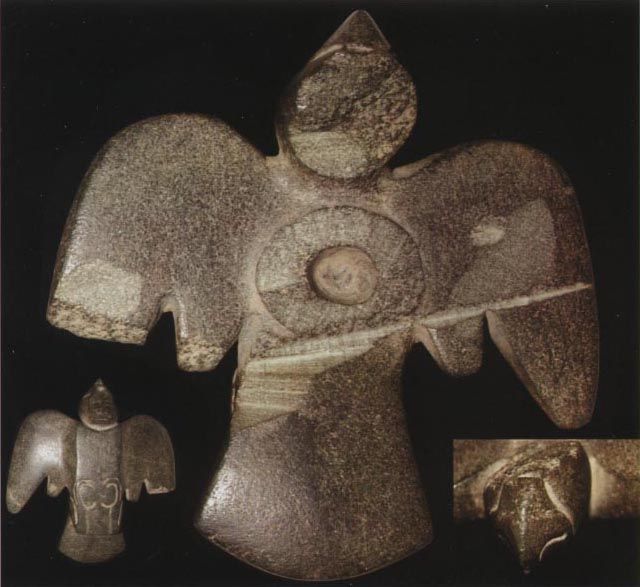
By Matt March 25, 2026
Explore the mystery of undrilled bird effigy pipes from TN. Learn about their significance & share your finds with us!
By tkxkuugb-ca March 20, 2026
Tune in to the Seven Ages Podcast to explore the Adena culture, Moundbuilders of the Ohio Valley. Join us for insights on Native American artifacts.
By Arrowheads March 20, 2026
Explore Gary Varient's passion for Native American artifacts. Join the community and share your collection today!
By Matt March 14, 2026
Learn to identify authentic arrowheads vs. reproductions. Consult experts for accurate appraisals and avoid costly mistakes.
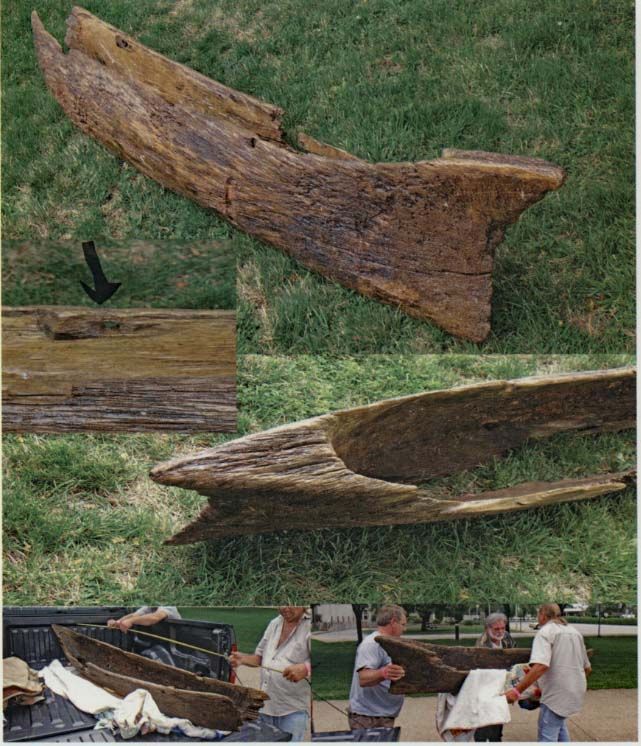
By Matt March 3, 2026
Learn about the rare dugout canoe found in the Ohio River. Contact us for artifact appraisal & preservation guidance.
By tkxkuugb-ca February 21, 2026
Learn more about the Paleo American Odyssey in these articles.
Show More