
The Prehistoric Peoples of Arkansas

Share this article

by Steven R. Cooper

Originally Published in the Central States Archaeological Journal, Vol.55, No.4, pg.174

It is easy to become confused with all the different terms involving Arkansas ar­chaeology. Like the rest of the Mid-West, the state has a long pre-history that spans the Paleo through Mississippian time periods. Unlike some other areas, there are a lot of sites where there is evidence of contact with the early explorers. This “Proto-Historic” pe­riod is very interesting, producing such items as teapot shaped pottery and Spanish motifs.

It is during the Mississippian period that you see the emergence of high quality pot­tery skills. While many sites are considered strictly Mississippian, there is also the rise of the Quapaw and Caddo, both very region spe­cific and producing certain styles of pottery and other artifacts.

Mississippian sites that were located along the Mississippi and the St. Francis River drainage basins produced a vast amount of the pottery associated with Arkansas. Many of the styles are named after sites, some in Arkansas and some in Mississippi. Styles such as “Bar­ton Incised” or “Rhodes Incised” are named after sites where initially these styles were found (the Barton Ranch Site and the Rhodes Place Site, both in Crittenden County). The pottery produced in this area is ninety percent gray-ware, the other vessels being pair4ed solid or multicolored.

Gray-ware finishes are of two varieties, Neely’s Ferry Plain and Bell Plain (again. named after the Neely’s Ferry Site in Cross County and the Bell Place Site in Missis­sippi County). Neely’s Ferry Plain ( Figure 1 ) has a finish that shows the mussel shell on the surface. This is the result of utilizing larger, variable sized shell for tempering. Bell Plain (Figure 2) utilized very small crushed shell for tempering. Originally it was thought that the fine surface of these vessels was the result of being dipped in a liquid paste just before firing, so that a slip covered the entire vessel. However, recent research has shown that these vessels were fired at a relatively low temperature, resulting in the core of the vessel maintaining a lower temperature. This causes the vessel’s surface to have a different color and texture. Many times af­ter firing, Bell plain vessels were burnished to a high polish utilizing a polishing stone. Many features were added to these vessels, such as utilizing instruments to jab the pottery to create a design (punctation), creat­ing additional features with clay strips to the vessel (appliqué), engraving on the vessel af­ter firing or incising the vessel before firing. Incising could be executed when the paste was wet, soft, firm and dried, or even after fir­ing in some styles.

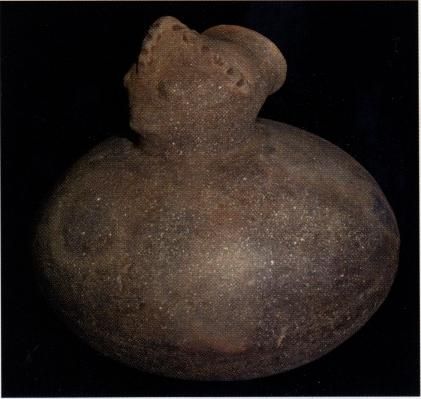
A Mississippian Hooded Corn God Effigy
height: 10″ width 8″
Lee County, Arkansas

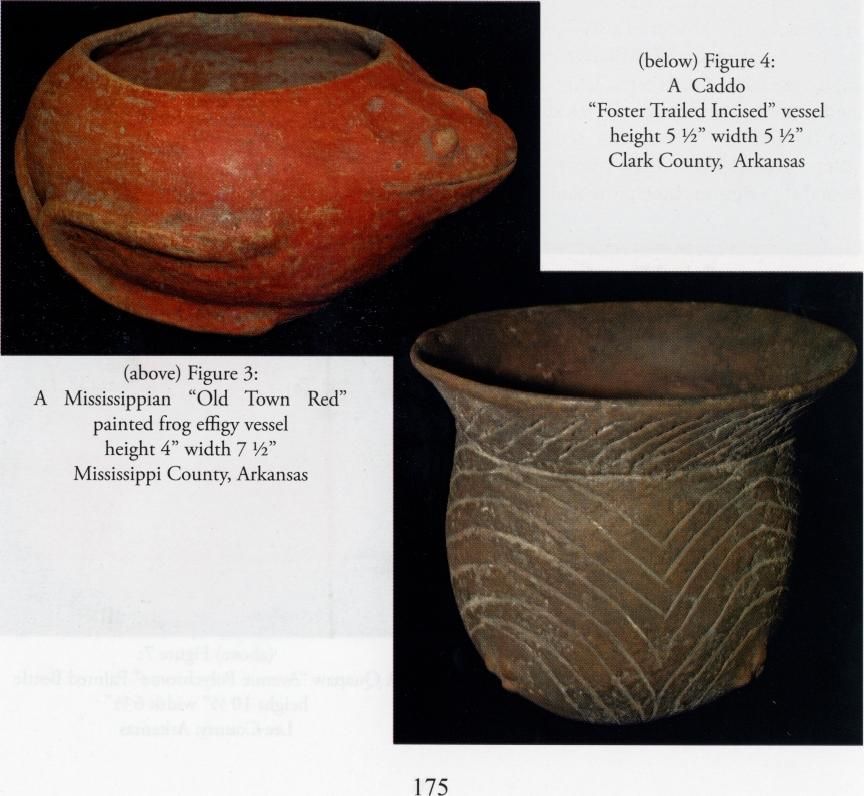
In addition, certain vessels were painted (Figure 3) usually with a red or white paint. Painted vessels have a slip of pigment color­ing applied to their surface.

As mentioned previously, various sites produced distinctive forms. Nearly always named after the site of origin, some common forms are Barton Incised, Rhodes Incised, Parkin Punctated, Kent Incised, Fortune Noded, Walls Engraved, Avenue Polychrome and Vernon Paul Appliqué to name a few.

In addition to these Mississippian Culture Sites, there are also two other distinctive Ar­kansas groups, the Caddo and the Quapaw.

The Caddo occupied the four corners area of Arkansas, Oklahoma, Texas and Louisi­ana. The approximate center of the prehis­toric Caddo is near the Big Bend of the Red River. The most important site showing the transition of the earlier Coles Creek Culture into Caddoan is the Crenshaw site, which lies on the Big Bend of the Red River, near the present day town of Texarkana. There is re­cent evidence that the people who occupied Spiro Mound were Caddo. When Desoto and his expedition visited the area in 1541, they found the Caddo villages were spread out and not surrounded by stockades in contrast to the fortified villages on the Mississippi.

The Caddo were master pottery makers. Their pottery too, is identified with the site and manufacturing earmarks (Figures 4 and 5). Styles of Caddo pottery include Bailey En­graved, Dunkin Incised, Harleton Appliqued, Handy Engraved and Keno Trailed. There are perhaps fifty or more styles. The Caddo continued to thrive well into the historic peri­od, and their descendents moved to Oklahoma forming the modern Caddo Nation after the Civil War.

The Quapaw too have descendents that live in Oklahoma. They traded extensively with the French during historic times. They occu­pied sites along the Arkansas River as well as the Mississippi River. Their pottery is very visual (Figure 7), with their painted and ef­figy pieces being some of the most artistic cre­ations ever made. They occupied some of the same areas as the Mississippians, and again their styles are named in association with the sites and stylizations. Avenue Polychrome, Old Town Red and Winterville Incised are just a few of the styles they are known for.

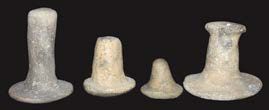
Obviously, these various cultures produced much more than pottery. The Caddo had some of the finest lithic skills of any prehistoric culture. Some of their miniature arrowheads, such as the Agee and Hayes styles are truly amazing (Figure 8). The Mississippians and the Quapaw too, created works of shell, stone and flint (Figure 6). In viewing the artistic output of these cultures, it is quite amazing to see how very talented, advanced and complex their prehistoric societies must have been.

Recent Posts

By Kevin Jerome July 24, 2026
Explore the significance of Mississippian pottery trowels. Learn about their use in pottery-making & view our collection.
By tkxkuugb-ca June 29, 2026
Explore the Paleoindian Database for insights on Native American artifacts. Contact us for appraisals & collection support.
By tkxkuugb-ca May 16, 2026
Explore insights on Clovis tools & Scott Ashcraft's whistleblower case. Join the discussion on ethics in archaeology today!
By tkxkuugb-ca April 13, 2026
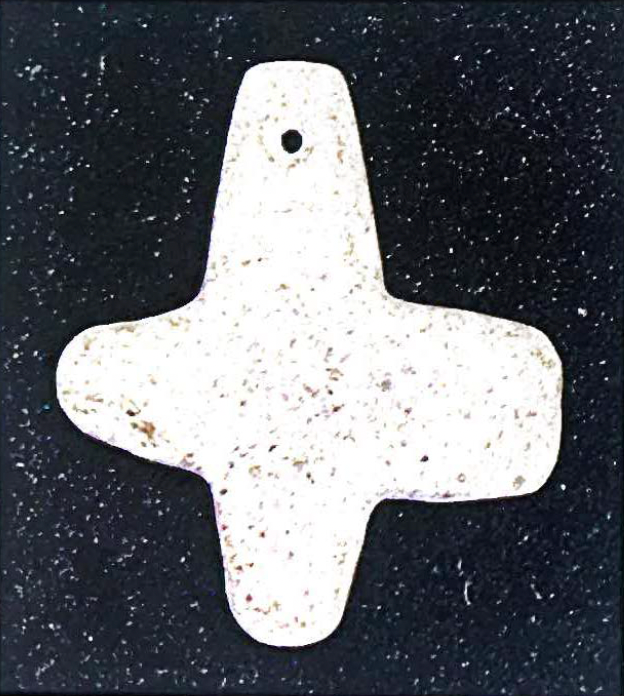
Learn about miniature Mississippian axe pendants' cultural significance. Contact us for appraisals & to buy authentic artifacts.
By Matt March 25, 2026
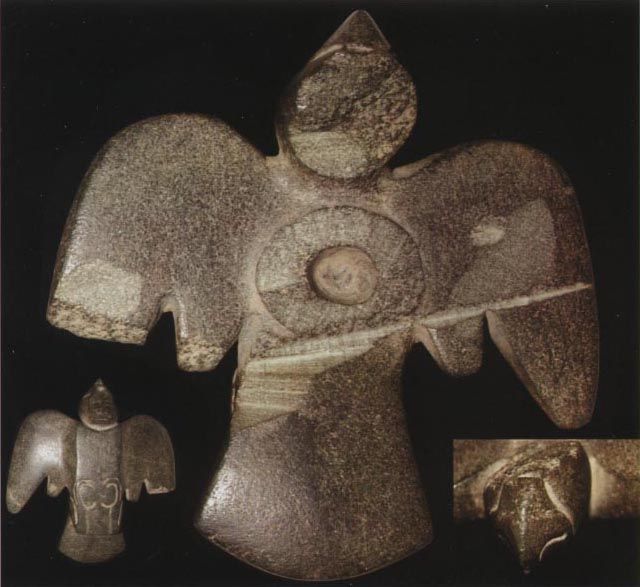
Explore the mystery of undrilled bird effigy pipes from TN. Learn about their significance & share your finds with us!
By tkxkuugb-ca March 20, 2026
Tune in to the Seven Ages Podcast to explore the Adena culture, Moundbuilders of the Ohio Valley. Join us for insights on Native American artifacts.
By Arrowheads March 20, 2026
Explore Gary Varient's passion for Native American artifacts. Join the community and share your collection today!
By Matt March 14, 2026
Learn to identify authentic arrowheads vs. reproductions. Consult experts for accurate appraisals and avoid costly mistakes.
By Matt March 3, 2026
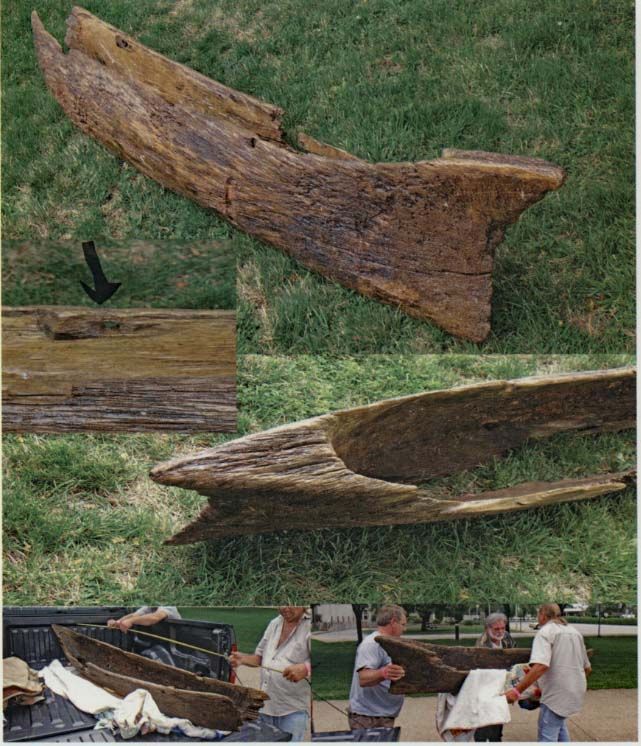
Learn about the rare dugout canoe found in the Ohio River. Contact us for artifact appraisal & preservation guidance.
By tkxkuugb-ca February 21, 2026
Learn more about the Paleo American Odyssey in these articles.
Show More