
Flaking and Reduction Strategies as a Chronological IndicatorIn Cumberland and Early Archaic Artifacts

Share this article

by Greg L. Moore, DVM, Rhome, Texas

Originally Published in the Central States Archaeological Journal, Vol.56, No.4, pg.200 Originally Published in the Central States Archaeological Journal, Vol.57, No.1, pg.37

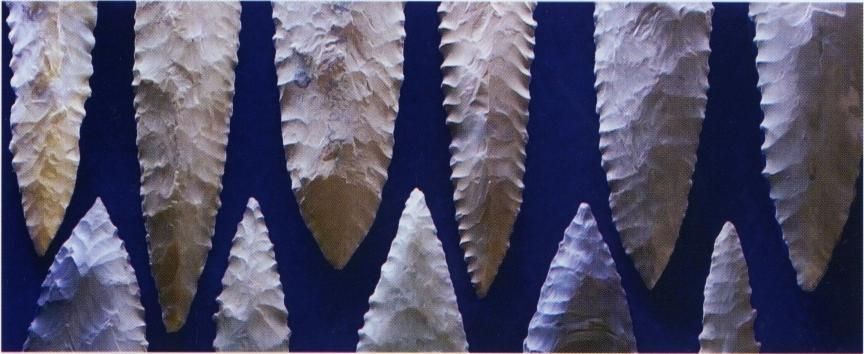
Above: Projectile point tips showing flaking patterns. Notice the similarity amongst the various points. Can you iden­tify any particular points from this picture? Which tips belong to an Archaic Point? Which belong to a Cumberland? Evidence has been recently presented to the archaeological community that perhaps the Cumberland Point predates the Clovis Point. While this article does not try to disprove this hypothesis, it does give a different perspective on point style similarities and perhaps reason to rethink the way we construct point chronology. See the full photo on the next page for the rest of the points.  

This article presents nothing new and has been employed by both amateur and profes­sional archaeologists for decades. Many knife and projectile point types have never been discovered in a datable context. When this occurs, these artifacts are often assigned as­sumptive or presumed time periods. Studying the flaking patterns to produce the preform or artifact and the reduction strategies employed as the artifact is utilized to replenish the blade edges, one can compare similar techniques found on artifacts from a dated context.

Of benefit in employing this method of dat­ing is the relative “constant” that every specif­ic type of knife or projectile of a “documented type” is manufactured and re-sharpened in a similar technique with relatively little varia­tion. This suggests that specific artifact types had predetermined uses and hafting techniques employed by the people using them. Where variations do exist, most can be attributed to the differences in chosen lithic materials and the skill of the ancient knapper.

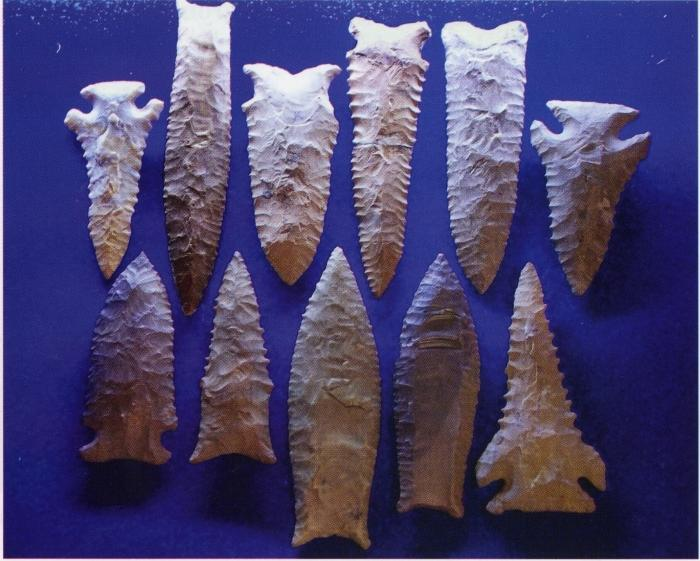
The pictures used in this article are simple yet represent the point ofthis article- the unique similarities in flaking and reduction tech­niques between Cumberland period artifacts and those of the early Archaic period includ­ing Heavy Duty, Greenbriar, Pine Tree, Col­bert Dalton, Palmer and possibly, Harpeth River.

The Cumberland, in both its fluted and unfluted forms, was named for the Cumber­land River Valley where it is predominately found and includes the states of Tennessee, Alabama, Kentucky, and Ohio. The early Ar­chaic artifacts previously listed also appear to be concentrated in a similar geographical area and could suggest a possible relationship.

Although exact dates cannot be determined, to the author, it appears that the Cumberland artifacts may only marginally predate these early archaic types. Certainly it is possible that the early archaic types may have evolved directly from the Cumberland technology and some, such as the Heavy Duty for example, may have co-existed with the Cumberland but had other specific uses unknown to us at this time.

The complete picture from the top of the article  “Flaking and Reduction Strategies as a Chronological Indicator In Cumberland and Early Archaic Artifacts” “Used by Permission of the Author”
To learn more about or to join the Central States Archaeological Society, click here: CSASI.org

Recent Posts

By Kevin Jerome July 24, 2026
Explore the significance of Mississippian pottery trowels. Learn about their use in pottery-making & view our collection.
By tkxkuugb-ca June 29, 2026
Explore the Paleoindian Database for insights on Native American artifacts. Contact us for appraisals & collection support.
By tkxkuugb-ca May 16, 2026
Explore insights on Clovis tools & Scott Ashcraft's whistleblower case. Join the discussion on ethics in archaeology today!
By tkxkuugb-ca April 13, 2026
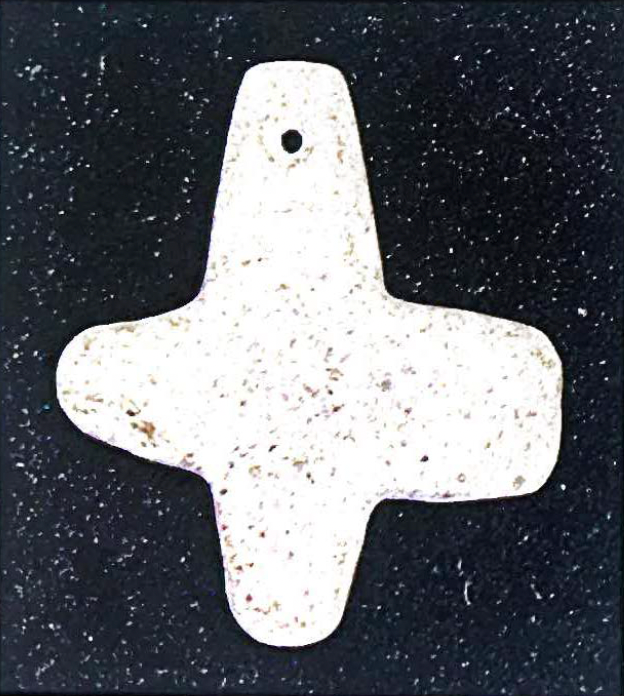
Learn about miniature Mississippian axe pendants' cultural significance. Contact us for appraisals & to buy authentic artifacts.
By Matt March 25, 2026
Explore the mystery of undrilled bird effigy pipes from TN. Learn about their significance & share your finds with us!
By tkxkuugb-ca March 20, 2026
Tune in to the Seven Ages Podcast to explore the Adena culture, Moundbuilders of the Ohio Valley. Join us for insights on Native American artifacts.
By Arrowheads March 20, 2026
Explore Gary Varient's passion for Native American artifacts. Join the community and share your collection today!
By Matt March 14, 2026
Learn to identify authentic arrowheads vs. reproductions. Consult experts for accurate appraisals and avoid costly mistakes.
By Matt March 3, 2026
Learn about the rare dugout canoe found in the Ohio River. Contact us for artifact appraisal & preservation guidance.
By tkxkuugb-ca February 21, 2026
Learn more about the Paleo American Odyssey in these articles.
Show More