
Fakes and Frauds

Share this article

Don Gustafson, Cadillac, Michigan

Now that some of the emphasis on the subject of legislative concerns has died down, let’s get back to the problem of fakes. While we have been busy worrying about these legislative situations on the state and federal levels, the problem of fake arti­facts has continued to grow.

A member of another archeological society re­’ cently informed me that they are no longer authen­ticating artifacts. With so many fakes out there, they are concerned that some might slip by them, and they do not want to take a chance of contribut­ing to the problem by unknowingly authenticating even one of the exceptionally good reproductions on the market today.

While walking through one of the artifact shows I attended last year, I counted thirty-four artifacts I knew to be fake. I don’t consider myself an expert, so doubting my own ability to pick them out, I had someone else check also. He returned, saying he had spotted in the neighborhood of thirty pieces that he felt were fakes.

Another example of this problem showed up at my door in the form of a woman who wanted to sell some Indian artifacts. She said they were given to her by an uncle in Texas and that if she was ever in financial trouble she could sell them. She also said she had let the baby play with them. Being concerned about possible damage to these pieces, I informed her that I would be interested in buying them. She returned the next day with several polished celts, a butterfly banner stone and what she called a sword, approximately twenty inches long. I had to tell her that they were all reproductions and had no value. A week later, a friend who lives about 10 miles away called to tell me he had some Indian artifacts to sell. He thought he had gotten a great deal on them. By his description, I was certain they were the same pieces. I described her to him, and he agreed it was the same lady and the same relics. Naturally, he was upset that she had put one over on him. He later told me he had sold them to an old farmer who didn’t care if they were authentic or not; he just liked and wanted them. A few months later, another collector I know who lives 50 miles away called to tell me about the great twenty-inch spear he bought from a local man whose grandfather had found it in a mound many years ago. You guessed it; it was the same piece mentioned above.

Another twist to the problems I’ve come across involves fraudulent documentation to improve the monetary value of perfectly good artifacts. I have sold pieces I knew to be authentic. I provided the buyer with the information on where, when, and by whom it was found, only to see the same piece at a show with a completely different background displayed on it, I assume to warrant the inflated price. This practice also ruins the value of the piece by losing the real documentation forever. It also poses another potential problem. The party faking the history may not be knowledgeable about the area he is claiming it came from. The material it’s made from and the point type itself may have no relationship to the false history. Someone that is knowledgeable about the artifacts of the area will naturally brand the perfectly good piece a fake. One person’s greed can forever de­stroy an authentic artifact.

It’s bad enough to see so many fakes on display at the shows, but to see them for sale on dealers’ tables is frightening. So many of these artifacts end up in the hands of novice collectors and sour them for life, not only on the dealers but also on the societies. Someone with a genuine interest in artifacts who could be an asset to our archeology society is lost before we ever learn of his potential. Once again the motive is greed. It is not just new collectors that are being fooled by the quality of the fakes out there. The sad part is that some of these dealers are supposed to be authenticators and are not only selling bad artifacts, but are not standing behind what they sell. This isn’t true of all dealers, but the type I’m speaking of are pre­sent at the shows too.

Not all is doom and gloom. There are a lot of good people and honest dealers out there. There are still good genuine artifacts to be bought. My advice is:

– buyer beware

– get more than one opinion before buying

– ask for a written guarantee that if the piece is found to be fake it can be returned for a full refund

– improve your knowledge of materials, flaking, form, and history of the different type of arti­facts

– use common sense- if in doubt, live without

The post Fakes and Frauds appeared first on Arrowheads.com.

Recent Posts

By Kevin Jerome July 24, 2026
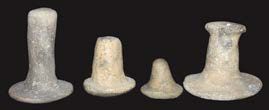
Explore the significance of Mississippian pottery trowels. Learn about their use in pottery-making & view our collection.
By tkxkuugb-ca June 29, 2026
Explore the Paleoindian Database for insights on Native American artifacts. Contact us for appraisals & collection support.
By tkxkuugb-ca May 16, 2026
Explore insights on Clovis tools & Scott Ashcraft's whistleblower case. Join the discussion on ethics in archaeology today!
By tkxkuugb-ca April 13, 2026
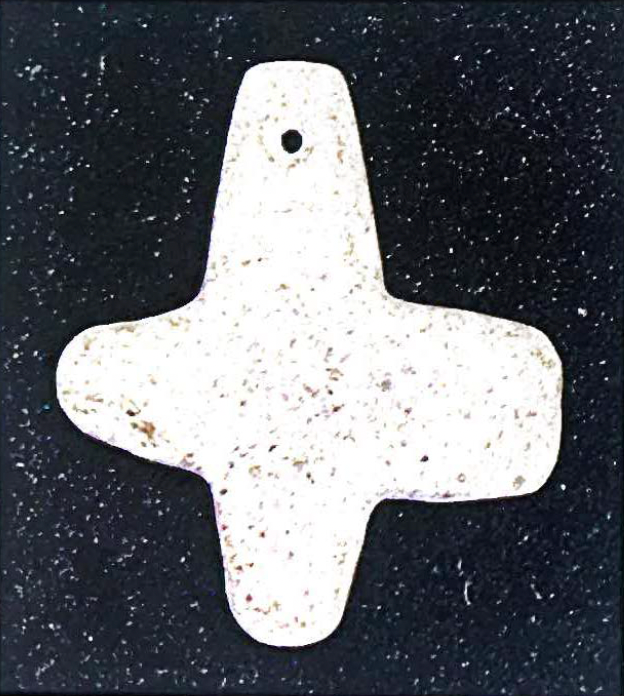
Learn about miniature Mississippian axe pendants' cultural significance. Contact us for appraisals & to buy authentic artifacts.
By Matt March 25, 2026
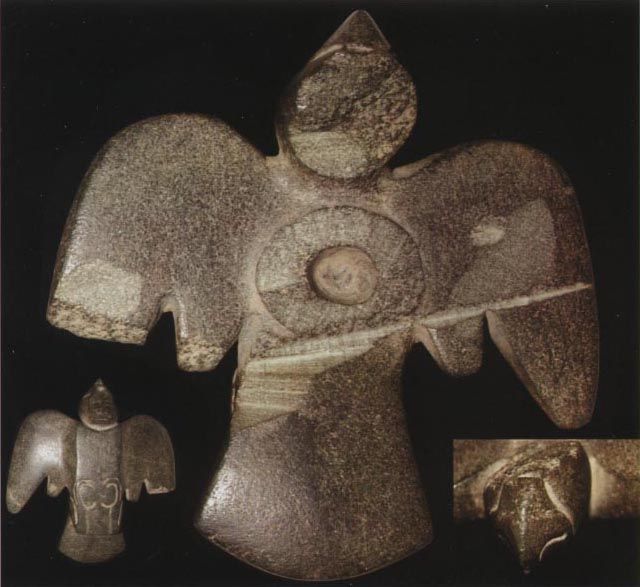
Explore the mystery of undrilled bird effigy pipes from TN. Learn about their significance & share your finds with us!
By tkxkuugb-ca March 20, 2026
Tune in to the Seven Ages Podcast to explore the Adena culture, Moundbuilders of the Ohio Valley. Join us for insights on Native American artifacts.
By Arrowheads March 20, 2026
Explore Gary Varient's passion for Native American artifacts. Join the community and share your collection today!
By Matt March 14, 2026
Learn to identify authentic arrowheads vs. reproductions. Consult experts for accurate appraisals and avoid costly mistakes.
By Matt March 3, 2026
Learn about the rare dugout canoe found in the Ohio River. Contact us for artifact appraisal & preservation guidance.
By tkxkuugb-ca February 21, 2026
Learn more about the Paleo American Odyssey in these articles.
Show More