
Definition Of Birdstone Eyes

Share this article

The majority of birdstones were made without eyes. A rough estimate would be that only about one-third of all birdstones have some form of eyes. However, those birdstones that do have eyes can be very different in character and style. The following terminology for referring to eye treatment seems to be common in both the written literature and in the common vernacular when discussing birdstones. This terminology will be used when discussing birdstones within the text of this issue and in photograph captions.

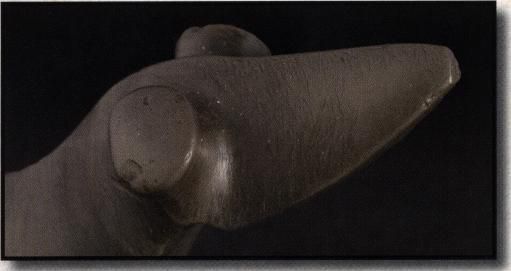
POPEYES:

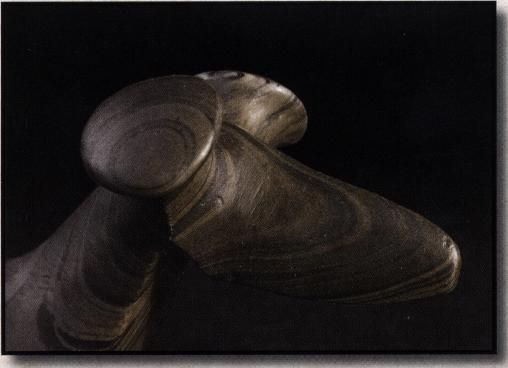
Popeyes represent the most dramatic type of eyes. In the past, the term popeyes has been used in a generic fashion to describe almost any type of eye that protrudes above the surface of the head. In an effort to clarify this terminology, the following definition is proposed. Popeyed birdstones have eyes that begin as contracting stems and terminate in flared round or oval discs. Ridges on the underside of the stems may or may not be present. In the past, popeyes have often been referred to as button eyes due to their resemblance to military style coat buttons.

Saddle Birdstone having popeyes and sharply defined ridges on the underside of the contracting eye stems, Miami County, Ohio

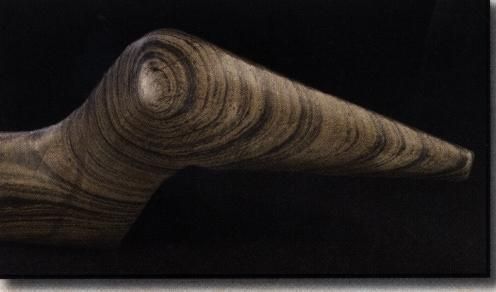
CONCENTRIC CIRCLE EYES:

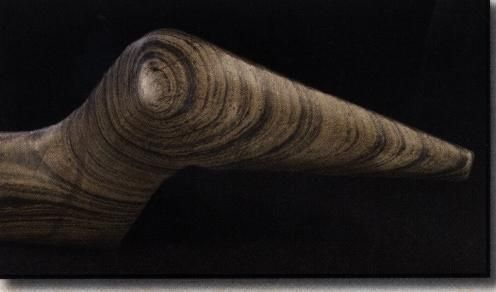
The concentric circle pattern of the banded slate terminates in the eye area of the head to create the illusory effect of eyes or pupils. When this type of eye occurs, it is usually on one side of the head only. This area may also be slightly raised or humped.

Typical Elongated Birdstone exhibiting concentric circle eyes, Jay County, Indiana

CYLINDRICAL EYES:

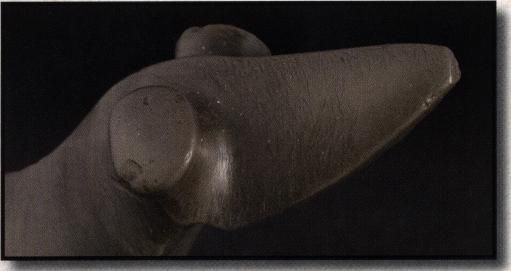
Cylindrical eyes are basically round cylinders protruding from the birdstone head and do not flare or expand to any significant degree. Cylindrical eyes may be thin and delicate or thick and heavy in structure. The length of cylindrical eyes varies.

Saddle Birdstone having cylindrical eyes that are heavy in structure, Calhoun County, Michigan

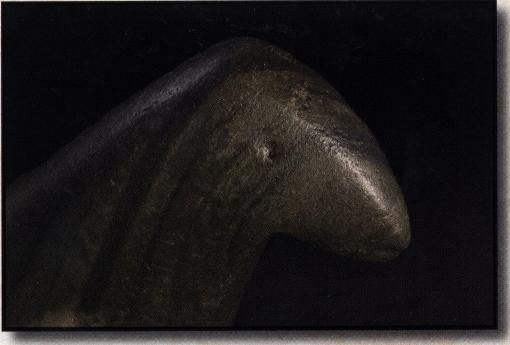
NODULAR EYES:

Nodular eyed birdstones have small rounded protuberances in the eye area resembling low, gently rounded mounds.

Elongated Fantail Birdstone having nodular eyes, Montcalm County, Michigan

CONICAL EYES:

Conical eyes taper from the head and terminate in a rounded or pointed cone shape. Conical eyes may also exhibit a “pinched-up” effect. This type of eye treatment may blend into the concentric circle type of eye.

Elongated Typical Birdstone exhibiting conical eyes, Kent County, Ontario, Canada

RIDGED EYES:

Ridged eyes on birdstones are rare. They have a protruding and usually sharp raised ridge that runs from the top of the head to the juncture between the neck and the head. Ridged eyes may sometimes encircle the entire head or beak.

Elongated Long Neck Birdstone having ridged eyes, Milwaukee County, Wisconsin

DRILLED EYES:

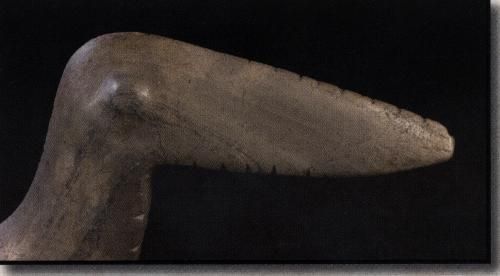
Drilled eyes are usually lightly made concave drillings into the side of the head. Typically this type of eye is small and sometimes barely discernable.

Another rare type of eye treatment should at least be mentioned. Incised eyes are those that have been scratched or etched into the eye area of the birdstone head. This type of eye treatment is seldom seen and tends not to appear on the finest examples of the art. The incisions in the eye area of the head may be very crude in contrast to the overall character of the birdstone, leading one to speculate the incisions/scratches were made by another person at a later time. (No examples were available for illustrative purposes.)

Chunky Birdstone having drilled eyes and an incised mouth, Kosciusko County, Indiana

In summation, it is hoped that the definitions identified above regarding birdstone typology and the treatment of eyes will be helpful in the future discussion of birdstones. By using terminology that is in direct correlation to the physical attributes of these artistic creations a commonality of language will hopefully ensue. A final caveat must once again be noted. Birdstone types may blend from one type to another, and the treatment of eyes also blends from one type to another. Many superb examples of birdstones exist that have blending body form types or blending types of eyes.

The post Definition Of Birdstone Eyes appeared first on Arrowheads.com.

Recent Posts

By Kevin Jerome July 24, 2026
Explore the significance of Mississippian pottery trowels. Learn about their use in pottery-making & view our collection.
By tkxkuugb-ca June 29, 2026
Explore the Paleoindian Database for insights on Native American artifacts. Contact us for appraisals & collection support.
By tkxkuugb-ca May 16, 2026
Explore insights on Clovis tools & Scott Ashcraft's whistleblower case. Join the discussion on ethics in archaeology today!
By tkxkuugb-ca April 13, 2026
Learn about miniature Mississippian axe pendants' cultural significance. Contact us for appraisals & to buy authentic artifacts.
By Matt March 25, 2026
Explore the mystery of undrilled bird effigy pipes from TN. Learn about their significance & share your finds with us!
By tkxkuugb-ca March 20, 2026
Tune in to the Seven Ages Podcast to explore the Adena culture, Moundbuilders of the Ohio Valley. Join us for insights on Native American artifacts.
By Arrowheads March 20, 2026
Explore Gary Varient's passion for Native American artifacts. Join the community and share your collection today!
By Matt March 14, 2026
Learn to identify authentic arrowheads vs. reproductions. Consult experts for accurate appraisals and avoid costly mistakes.
By Matt March 3, 2026
Learn about the rare dugout canoe found in the Ohio River. Contact us for artifact appraisal & preservation guidance.
By tkxkuugb-ca February 21, 2026
Learn more about the Paleo American Odyssey in these articles.
Show More