
Ancient Mississippian Pastimes

Share this article

by E. J. Neiburger, Waukegan, Illinois

Originally Published in the Central States Archaeological Journal, Vol.57, No.4, pg.188

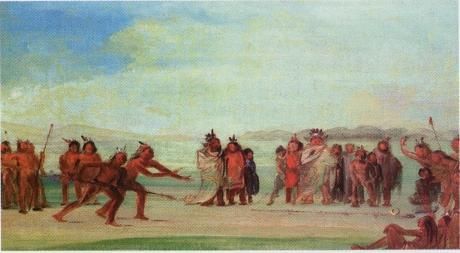
George Catlin painting of Mandan Indians playing Chunke in 1832, showing the game reached into historic times.

The ancient Mississippians were a complex soci­ety sharing many traditions of the Meso-Americans and Southwest Indian groups. The Mississippians could be characterized as living in a theocracy. Individuals and groups would go through various kinds of rituals and ceremonies every day. There was a seamless belief be­tween the physical and supernatural worlds of the pres­ent and the past.

The Mississippians believed in a layered cosmos with a celestial “above world,” a “middle world” where everyday life occurred, and a “subterranean world” that lay under the earth and waters. Everyday games and oth­er activities had an intense spiritual as well as temporal impact that stresses this belief.

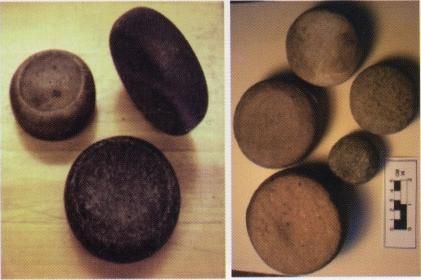
One of the more popular games the Mississippians played was Chunke (Chunkey). In this game a chun­key stone, in the shape of a 2 to 6 inch diameter dis­coidal (Figures 1-2) was rolled over the bare ground or ice while several players threw spears in an attempt to mark where the stone would stop rolling. The closest spear to the final location of the stone, without actu­ally hitting the stone, determined the winner. Extensive audience participation including wild gambling, singing and spiritual “guidance” made this an observer as well as athlete sport. The game continued to be played into the historic period. DeSoto, in his visits of Mississip­pian settlements in the early 1500s, described this game which was played by many other tribes (e.g. Mandan, Hidatsa), even into modern times.

The Mississippians, like many of the other In­dian groups, were cannibals. They, like their Me­so-American (e.g.Maya, Aztec) and South Western (e.g. Anasazi) cousins went to war, captured prisoners, tortured them, scalped them and then ate them raw or cooked(Turner, 1999). In some cases, large numbers of individuals were consumed. This pastime, as horrible as it sounds, is evident from several sources. The first is the writings of DeSoto who visited Mississippian vil­lages in the waning years of that culture. He reports of seeing the burning of prisoners and their scalps hung from spear poles being paraded through the villages.

Left: Discoidals from Wisconsin,  Milwaukee Public Museum     Right: Discoidals from Georgia/Tennessee

A second indication is the practices of the contemporary Meso-Americans and South Western Indians who were well documented cannibals. The Aztecs and Mayans killed thousands in an attempt to spill enough blood to please the gods. The Mississippians had similar customs, organization, religion and history. They did es­sentially everything the Meso-Americans did.

The third indication was the presence of many can­nibalized skeletons in Mississippian village waste dumps (not cemeteries). These remains were comin­gled with the bones of other food animals and village garbage. For example, at Aztalan, Wisconsin, archae­ologists unearthed a surprising number of scattered human bones discarded in refuse pits, fireplaces and in other garbage depots. The bones and bone frag­ments found there represented all parts of the skeleton and many showed clear signs of cutting, dismember­ment, breaking and charring (cooking)(Figures 3-4). Many of these bones showed unique breakage so mar­row and brain matter could be removed(Figure 5). There is considerable evidence of pot polished bones (the bone edges were broken and then smoothed by being stirred and rubbed against the side of a clay y cooking pot). (Figures 3-4). These remains have been found at Cahokia, Ramey, Aztalan and other Mississip­pian sites.”Used by Permission of the Author”
To learn more about or to join the Central States Archaeological Society, click here: CSASI.org

The post Ancient Mississippian Pastimes appeared first on Arrowheads.com.

Recent Posts

By Kevin Jerome July 24, 2026
Explore the significance of Mississippian pottery trowels. Learn about their use in pottery-making & view our collection.
By tkxkuugb-ca June 29, 2026
Explore the Paleoindian Database for insights on Native American artifacts. Contact us for appraisals & collection support.
By tkxkuugb-ca May 16, 2026
Explore insights on Clovis tools & Scott Ashcraft's whistleblower case. Join the discussion on ethics in archaeology today!
By tkxkuugb-ca April 13, 2026
Learn about miniature Mississippian axe pendants' cultural significance. Contact us for appraisals & to buy authentic artifacts.
By Matt March 25, 2026
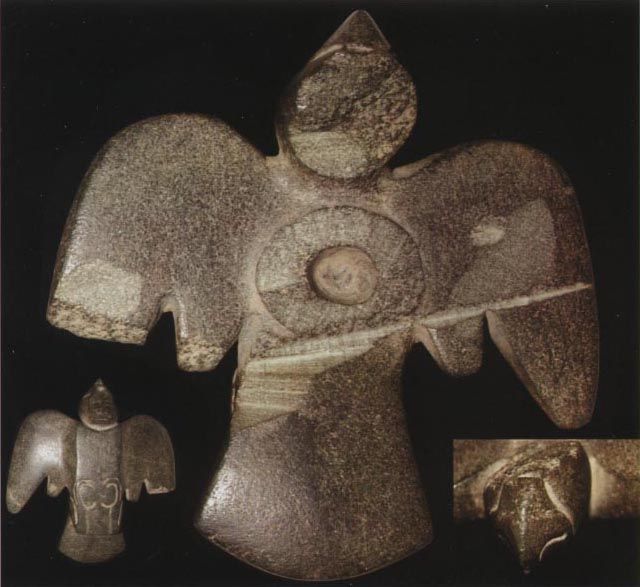
Explore the mystery of undrilled bird effigy pipes from TN. Learn about their significance & share your finds with us!
By tkxkuugb-ca March 20, 2026
Tune in to the Seven Ages Podcast to explore the Adena culture, Moundbuilders of the Ohio Valley. Join us for insights on Native American artifacts.
By Arrowheads March 20, 2026
Explore Gary Varient's passion for Native American artifacts. Join the community and share your collection today!
By Matt March 14, 2026
Learn to identify authentic arrowheads vs. reproductions. Consult experts for accurate appraisals and avoid costly mistakes.
By Matt March 3, 2026
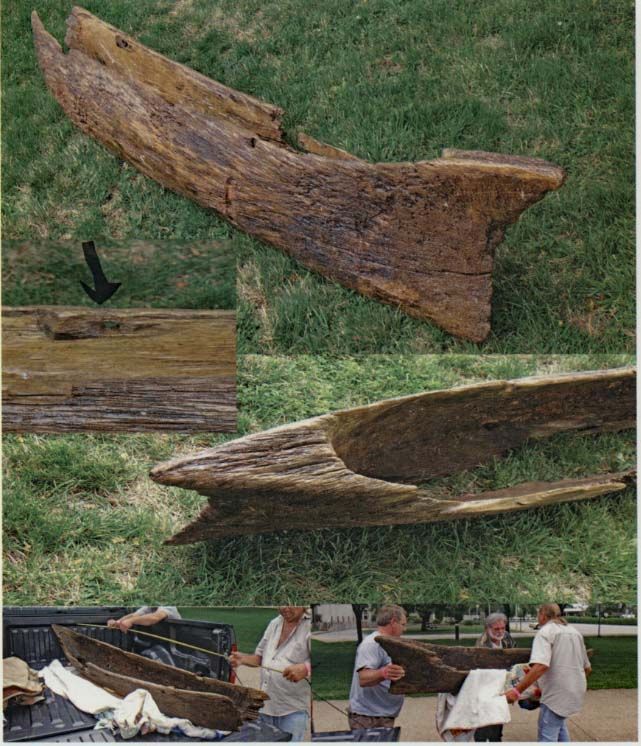
Learn about the rare dugout canoe found in the Ohio River. Contact us for artifact appraisal & preservation guidance.
By tkxkuugb-ca February 21, 2026
Learn more about the Paleo American Odyssey in these articles.
Show More