

A SALUTE TO DAVID L. LUTZ

Share this article

by Richard Michael Gramly, PhD  

THE ARCHAIC BANNERSTONE: ITS CHRONOLOGICAL HISTORY
AND PURPOSE FROM 6000 B.C. TO 1000 B.C. 
by DAVID L. LUTZ

Bannerstones exist both in art and anthropology. David L. Lutz, who has both a collector’s sensitivity and for­mal training in anthropology, knows this fact. Other long­time students of the subject also appreci­ate the fact and so, too, will careful read­ers of The Archaic Bannerstone. Although Lutz acknowledges a debt to earlier researchers such as Knoblock (1939), Webb (his many writings), and Kwas (1981), years of systematic inquiries and travel to document collections have earned him the right to speculate about what bannerstones meant to the ancient American societies who made and used them. Dave’s ideas command our attention.

In the space of 525 pages he presents thousands of superb photographs representing at least as many artifacts, which are the basis of his arguments. Lutz believes that bannerstones were not tools, but actual emblems of societal membership. In his opinion they were tangible manifestations of persons’ kinship or membership in clans. They may also have had economic value to clansmen, who conducted long-distance trade that brought shell from the Gulf of Mexico to the South (pp. 247, 431, and 510). The areas of distribution (p. 93) or exchange networks we assume, were larger than mere tribal territories. Bannerstones, as clan emblems, also endured for a much longer time than individual tribes or “nations” might be expected to persist.

Chronology, or the longevity and succession of the many forms of bannerstone through the centuries, is one of Dave Lutz’s primary concerns. His book has as many facts about dating as any one researcher might be expected to gather in a lifetime, and more than any reader might hope to assimilate during several sittings! Dave pays particular attention to co-occurrences of bannerstones and other artifact types useful for dating — such as projectile points. It is to the author’s lasting credit that he has crafted a work that presents so many critical facts relative to this topic.

Bannerstones have long been regarded as art — witness their places in books like Hothem’s Ancient Art of Ohio (1994), Brose et al.’s Ancient Art of the American Woodlands (1985), and Douglas and D’Harnoncourt’s Indian Art of the United States (1941) — to name a few. Dave Lutz is also aware of the strong visual impact that finely crafted bannerstones of choice raw materials have. He has illustrated many examples in full color within this volume. But to him even the use of certain stones has chronological value; he speculates as well that some raw materials were culturally, if not socially, expressive (for example, pp. 94 and 464).

Scattered throughout The Archaic Bannerstone are brief sections offering anecdotal and previously published information about famous discoveries, such as the Godar site (p. 321), and Dave’s own answers to often-asked questions, such as (p. 427) why were some bannerstones left undrilled when they were completed in every other way? His answers have the ring of credibility tempered in the fire of long familiarity. A book as impressive as Dave’s leaves one thirsting for more, and should it ever be reprinted, as researchers are sure to demand one day, both an Index and a Glossary should be added. His use of terminology assumes a reader’s familiarity with Knoblock’s Bannerstones of the North American Indian (1939). Although I have carefully leafed through this classic work, I never felt justified in paying the considerable price in order to own it. Other readers may be in the same position — therefore, the need for a glossary. Dave’s book deserves to stand all on its own, owing nothing, but perhaps inspiration itself, to earlier works.

Being a “married-in”, adoptive New Englander, who is familiar with the rich record of Archaic sites — both on the islands and estuaries of sea-girt “downeast” as well as along major waterways (like the Connecticut and Androscoggin) of the Interior — I would hope that a future expanded ver¬sion of The Archaic Bannerstone would picture some of the wonderfully delicate, impressive large bannerstones of this region. Many have exact provenience, and, yes, have been absolutely and relatively dated!

My real concern about The Archaic Bannerstone is that it will not be read by all the academic archaeologists who would stand to benefit from it. Truly, today certain fields of knowledge are better understood by astute North American artifact collectors and amateur scientists than they are by professionals with PhDs. This much I will admit myself. But Dave Lutz’s unique perspective on bannerstone-using Archaic groups cannot, and will not, be ignored for long by the audience who needs it most. There are scholars, who know a good thing when they read it, to bridge the gap.

Thank you, Dave. North Andover, Massachusetts December, 2001

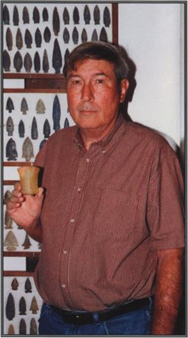
The author of The Archaic Bannerstone is shown in his relic room admiring one of the Hooked bannerstones from the Rockport site cache.

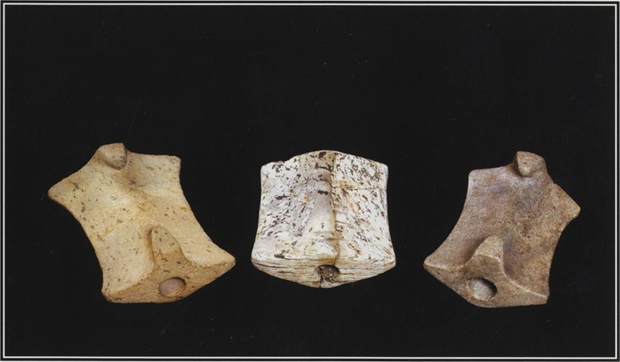
“Three Atlatl Cache”, Rockport site bannerstone cache found by the Lutz family on April 20, 1977. These banners were found in a feature on the Rockport site, Spencer County, Indiana. All three were “ceremonially killed”. Two of these bannerstones are of the rare Hooked style, while the third is an Hourglass type. (David Lutz Collection, Newburgh, Indiana) (David Lutz photo)

The post A SALUTE TO DAVID L. LUTZ appeared first on Arrowheads.com.

Recent Posts

By Kevin Jerome July 24, 2026
Explore the significance of Mississippian pottery trowels. Learn about their use in pottery-making & view our collection.
By tkxkuugb-ca June 29, 2026
Explore the Paleoindian Database for insights on Native American artifacts. Contact us for appraisals & collection support.
By tkxkuugb-ca May 16, 2026
Explore insights on Clovis tools & Scott Ashcraft's whistleblower case. Join the discussion on ethics in archaeology today!

By tkxkuugb-ca April 13, 2026
Learn about miniature Mississippian axe pendants' cultural significance. Contact us for appraisals & to buy authentic artifacts.
By Matt March 25, 2026
Explore the mystery of undrilled bird effigy pipes from TN. Learn about their significance & share your finds with us!
By tkxkuugb-ca March 20, 2026
Tune in to the Seven Ages Podcast to explore the Adena culture, Moundbuilders of the Ohio Valley. Join us for insights on Native American artifacts.
By Arrowheads March 20, 2026
Explore Gary Varient's passion for Native American artifacts. Join the community and share your collection today!
By Matt March 14, 2026
Learn to identify authentic arrowheads vs. reproductions. Consult experts for accurate appraisals and avoid costly mistakes.
By Matt March 3, 2026
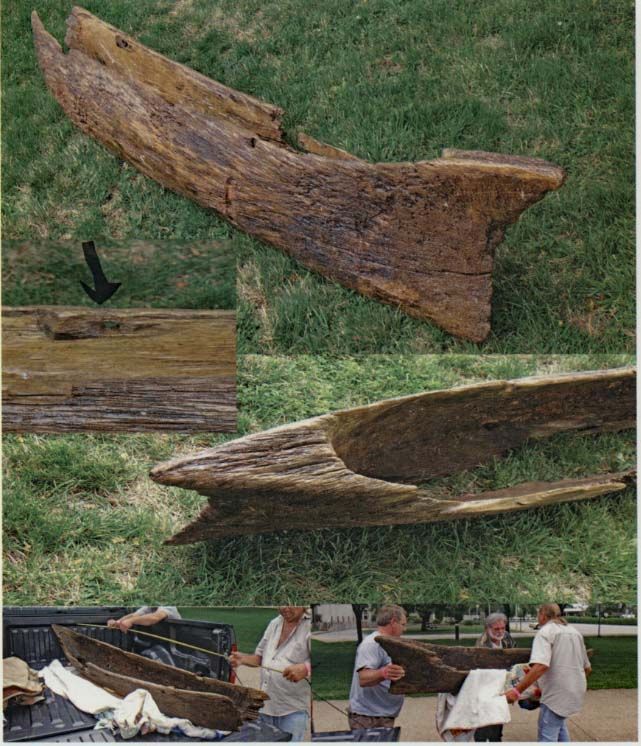
Learn about the rare dugout canoe found in the Ohio River. Contact us for artifact appraisal & preservation guidance.
By tkxkuugb-ca February 21, 2026
Learn more about the Paleo American Odyssey in these articles.
Show More