
A Large North Carolina Morrow Mountain Spear

Share this article

by, Rodney M Peck, Kannapolis, North Carolina

Originally Published in the Central States Archaeological Journal, Vol.56, No.4, pg.200

Originally Published in the Central States Archaeological Journal, Vol.57, No.2, pg.96

Perhaps one of the most common and well know projectile point types found in the Southeast is the “Morrow Mountain” point which is named after Morrow Mountain in North Carolina. This point, which is usually 1 to 3 inches in length, can also be found up to 5 — 7 inches long. The basic description of this point is a triangular blade with either a short or long tapered stem, usually rounded at the bottom.

The lithic material is usually local material such as silicified shale, chert, rhyolite, quartz, or quartzite. The Morrow Mountain point dates between 4,000 BC to 4,500 BC, which places it in the middle of the archaic period. Other artifacts that may be associat­ed with this type of spear are full groove axes, soap­stone bowls, atlatl weights (bannerstones), mor­tars, pestles, and other implements. These Indians were mostly hunters and gathers, and lived in both large base villages and small camps near streams, swamps, and rivers.

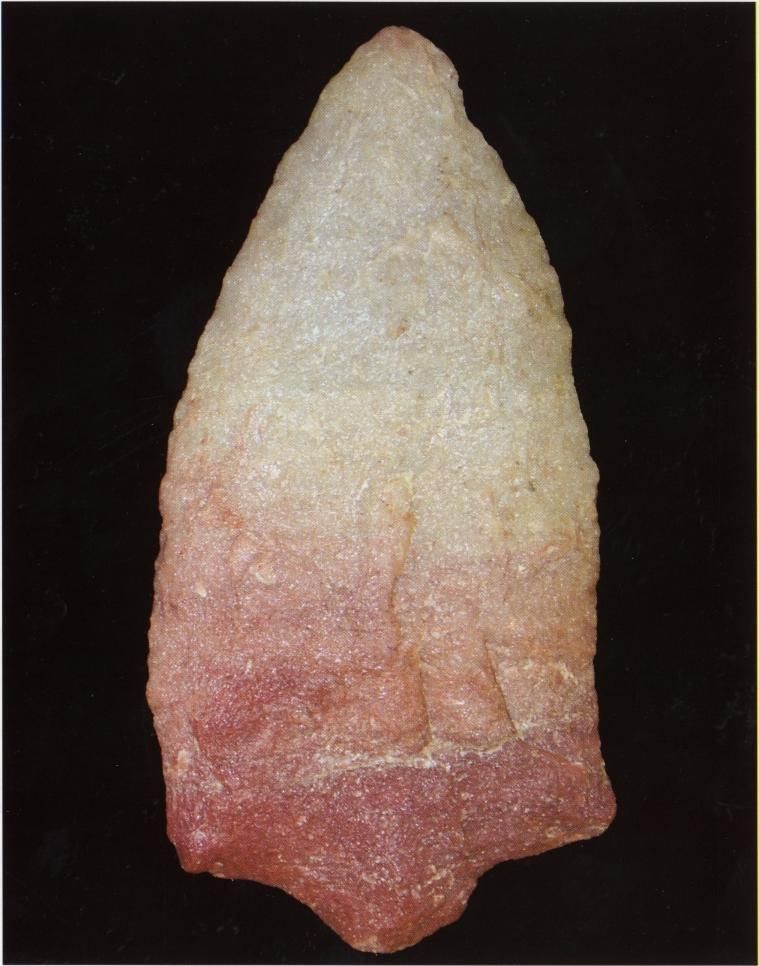
At top: A Large Morrow Mountain Spear from Granville County, North Carolina. It is 7 inches long, 3 3/8 inches wide, 5/8 inch thick and is made of local gray and red quartzite. Collection of the author.

The large spears, those that are 5 to 7 inches in length, can be found throughout the Virginia-North Carolina-South Carolina area; however, most are broken due to heavy farm equipment. When a large spear is found intact it is quite rare; however, sometime a large Morrow Mountain Spear is still found today in plowed fields, along with thou­sands of broken ones. Most all of the large Mor­row Mountain spears were used as spears and not knives for they lack the very fine secondary pres­sure flaking which is normally found on a knife. The one pictured, may or may not be completely finished; however, it does show signs of use. They also lack polish that indicates they were not used as digging implements to dig roots and other food from the earth. Small spears and projectile points from the Morrow Mountain culture are found on most of the archaic sites in the southeast and are considered very common; however, large spears like the one pictured is truly an exception.

The large Morrow Mountain Spear shown in the photograph was a surface find in Granville County, North Carolina and has little damage from farming equipment. This specimen was originally in the late Loy Carter collection until 1962 when it was sold to Bill Mosley of Virginia Beach, Virgin­ia. In 1963 Bill sold the spear to James Pritchard of Suffolk who kept it until 1983 when he let Dr. Steve Vermillion, who lived in Virginia Beach at the time, have it. The author purchased the spear from Dr. Vermillion thru C. J. O’Neill on May 2nd, 2009 to return it to North Carolina.

This Large Morrow Mountain is 7 inches in length, 3 3/8 inches wide and 5/8 of an inch in thickness. The material is a beautiful gray and red quartzite which is native to the area. The basal stem is slightly ground and the workmanship is above normal for the lithic material it is made of.”Used by Permission of the Author”
To learn more about or to join the Central States Archaeological Society, click here: CSASI.org

Recent Posts

By Kevin Jerome July 24, 2026
Explore the significance of Mississippian pottery trowels. Learn about their use in pottery-making & view our collection.
By tkxkuugb-ca June 29, 2026
Explore the Paleoindian Database for insights on Native American artifacts. Contact us for appraisals & collection support.
By tkxkuugb-ca May 16, 2026
Explore insights on Clovis tools & Scott Ashcraft's whistleblower case. Join the discussion on ethics in archaeology today!
By tkxkuugb-ca April 13, 2026
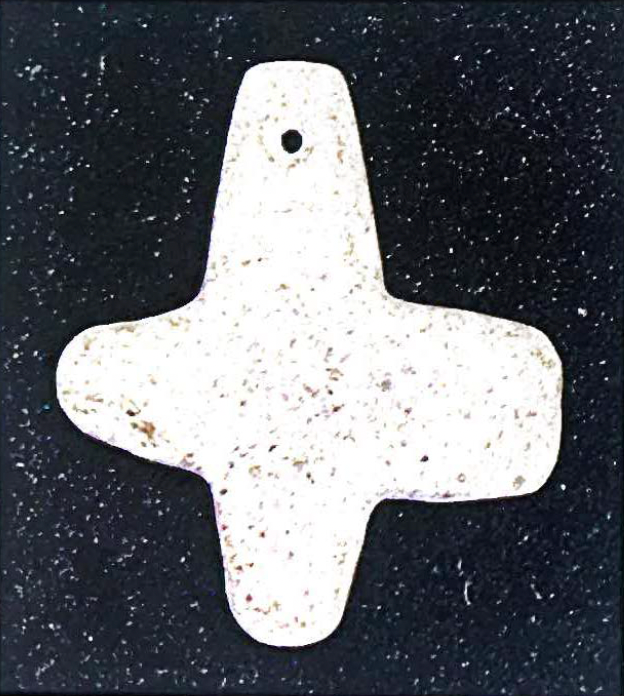
Learn about miniature Mississippian axe pendants' cultural significance. Contact us for appraisals & to buy authentic artifacts.
By Matt March 25, 2026
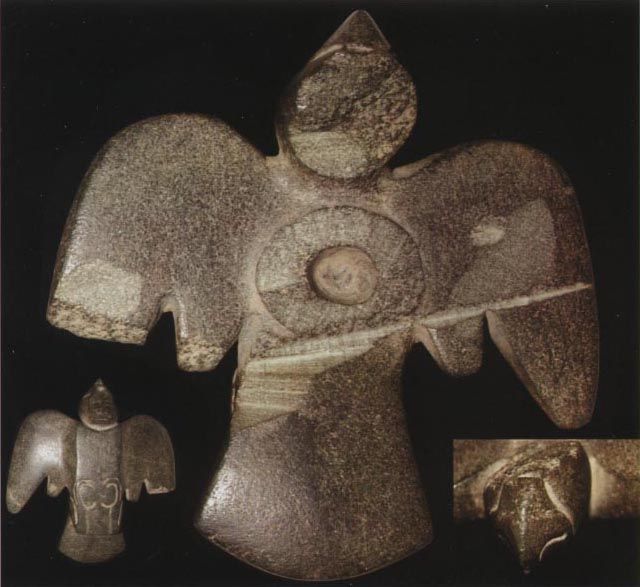
Explore the mystery of undrilled bird effigy pipes from TN. Learn about their significance & share your finds with us!
By tkxkuugb-ca March 20, 2026
Tune in to the Seven Ages Podcast to explore the Adena culture, Moundbuilders of the Ohio Valley. Join us for insights on Native American artifacts.
By Arrowheads March 20, 2026
Explore Gary Varient's passion for Native American artifacts. Join the community and share your collection today!
By Matt March 14, 2026
Learn to identify authentic arrowheads vs. reproductions. Consult experts for accurate appraisals and avoid costly mistakes.
By Matt March 3, 2026
Learn about the rare dugout canoe found in the Ohio River. Contact us for artifact appraisal & preservation guidance.
By tkxkuugb-ca February 21, 2026
Learn more about the Paleo American Odyssey in these articles.
Show More