
A Few Thoughts Regarding the Woodland Period

Share this article

by Steven R. Cooper, EIC  

Originally Published in the Central States Archaeological Journal, Vol.56, No.4, pg.200 Originally Published in the Central States Archaeological Journal, Vol.57, No.2, pg.119

It took real skill and engineering to construct a mound such as Sauls Mound. This 72 foot high mound towers over the Pinson Site near Jackson Tennessee. This complex was built around 1 AD, covers 400 acres, and has more than 30 mounds along with geometric earthen structures. It is obvi­ous from the lack of habitation evidence that this was strictly a religious site that probably served as a place of worship. Artifacts found there come from as far away as the Rocky Mountains and the shores of Florida. What drew people to it? And it is just one of many! The huge Hopewell earthworks near Chillicothe speak of a culture that was anything but primitive. They had to have an understanding of mathematics to design many of the earthworks, some of which are near perfect in form and alignment. Their artwork is on an equal level with anything ever created by human beings, and shows they had a highly evolved religion.

The picture usually presented of Woodland peoples is of gentle basket carrying farmers liv­ing out their simple lives in thatched huts. If only we had the real story. The artifacts show us these were smart people. They show us they were war­riors, skilled artisans and had an understanding of certain scientific principles . . There is much mystery here. Who really were the Hopewell, the Copena and the Adena peoples? We understand so little, and the pieces of the puzzle are so scattered that we may never truly know them.

When I hold an artifact from this time pe­riod, I enjoy pondering the mystery of the maker. What did he/she think? What language was spo­ken? What inspired them? There is so much more to know about the inspiration behind an Adena, a Ross or Jack’s Reef point. These were tools from the hands of a people we can only imagine in our minds, made before and after the Roman Empire,in a land right beneath our feet.

The Woodland Period covers a timeline of two thousand years from approximately 1000 BC to 1000 AD. In contrast, the Roman Empire lasts from 763 BC to the year 455 AD, when Rome was sacked by the Vandals. The documented history of Rome holds many major historical events; the destruction of Carthage, the murder of Caesar, the birth of Christ. The list could go on and fill this entire journal. Our art, law, government, literature and religion all have their beginnings tied to the time of Rome.

The Woodand Period lasted longer than Rome, and we would be foolish not to think that many of the same important events occurred here. What is missing is any written documentation. There are no records of any kind except the archaeological record. Something inspired the massive outpour­ing of energy to build mounds everywhere. Though many disappeared in the early 1800’s with the westward movement into the Ohio and Tennessee Valleys, we do know they impressed the pioneers. During the next one hundred years of American history, much thought was given to the origin of the mounds and who might have built them. There are even those today who don’t believe that Na­tive Americans could have been the designers and builders of such earthworks. If you go on the inter-net, there are even those who believe aliens built them! What is fact is that the leaders, religious figures, war lords and major events will never be known since there is no written record. The lack of building with stone convinced many profession­als to dismiss this culture as primitive and barely worthy of study.

The artifacts and earthworks must speak for these people. And they show that a high level of sophis­tication had evolved since the Paleo Period. Take some dirt and pile it up in a field and come back a year later. Odds are it will have washed away.

In the 1891-92 Annual report of the Bureau of Ethnology, the evidence is presented to fi­nally answer the question as to whether the earthworks and mounds were construced by Na­tive Americans or other ancient peoples. This huge 742 page volume brings together graphs, maps, pictures and a summary of sites for each state. The final paper by Cyrus Thomas confirms that the evidence shows without a doubt that “the tribes of Indians that occupied the continent at the time of discovery by Columbus” were the “moundbuilders.””Used by Permission of the Author”
To learn more about or to join the Central States Archaeological Society, click here: CSASI.org

Recent Posts

By Kevin Jerome July 24, 2026
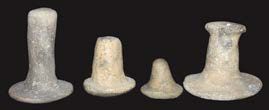
Explore the significance of Mississippian pottery trowels. Learn about their use in pottery-making & view our collection.
By tkxkuugb-ca June 29, 2026
Explore the Paleoindian Database for insights on Native American artifacts. Contact us for appraisals & collection support.
By tkxkuugb-ca May 16, 2026
Explore insights on Clovis tools & Scott Ashcraft's whistleblower case. Join the discussion on ethics in archaeology today!
By tkxkuugb-ca April 13, 2026
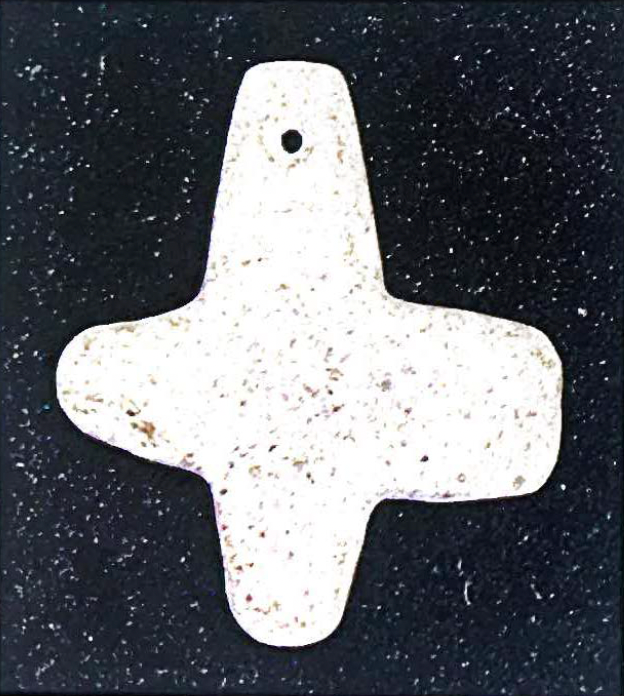
Learn about miniature Mississippian axe pendants' cultural significance. Contact us for appraisals & to buy authentic artifacts.
By Matt March 25, 2026
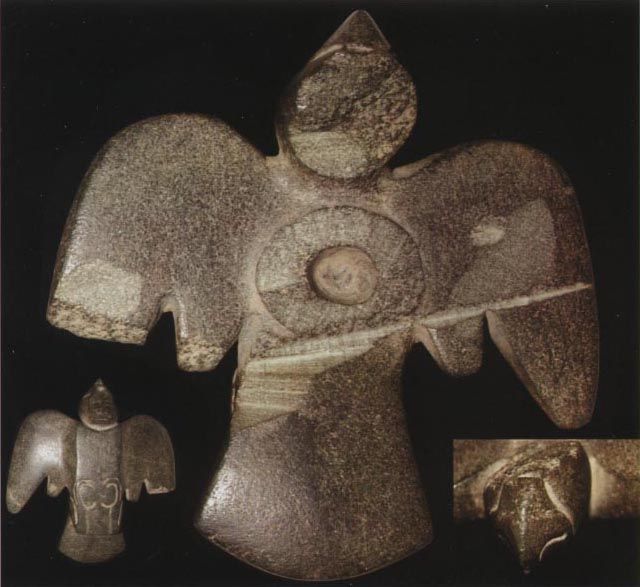
Explore the mystery of undrilled bird effigy pipes from TN. Learn about their significance & share your finds with us!
By tkxkuugb-ca March 20, 2026
Tune in to the Seven Ages Podcast to explore the Adena culture, Moundbuilders of the Ohio Valley. Join us for insights on Native American artifacts.
By Arrowheads March 20, 2026
Explore Gary Varient's passion for Native American artifacts. Join the community and share your collection today!
By Matt March 14, 2026
Learn to identify authentic arrowheads vs. reproductions. Consult experts for accurate appraisals and avoid costly mistakes.
By Matt March 3, 2026
Learn about the rare dugout canoe found in the Ohio River. Contact us for artifact appraisal & preservation guidance.
By tkxkuugb-ca February 21, 2026
Learn more about the Paleo American Odyssey in these articles.
Show More